Razer Fujin Reviews: See Why 0 Shoppers Rated It 0 Stars!
Some say the Razer Fujin ergonomic chair is a workflow lifesaver. Others... not so much. Here’s what 0 reviewers had to say.
 Supermod
 Moderator
 Recaptor
Razer Fujin ergonomic chair review: a minimalist mesh seat that reads like a spec sheet built for real desks
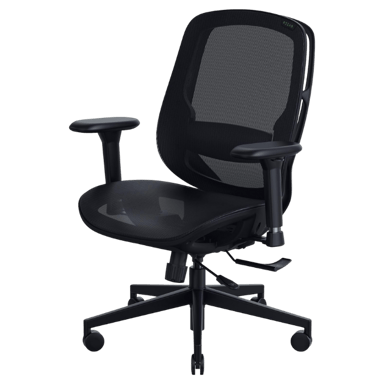
The Razer Fujin enters a crowded mesh-chair market with a clear goal: deliver a gaming brand's style without losing the office-first ergonomics many of us need for long sessions. It's built as a task/gaming hybrid that favors streamlined controls over flashy gimmicks, and on paper, it looks surprisingly measured. The company lists a RZ38-04950100-R3U1 model with a mesh seat-and-back, Class 4 gas lift, and ANSI/BIFMA certification hard numbers that matter more than buzzwords. You won't find a headrest or built-in massager here, but you will find a chair that seems engineered around dimensions, levers, and tolerances that translate directly into comfort.
Detailed Specs & Features
According to its engineering data, the Fujin is a task/gaming chair with a minimalist silhouette and a metal five-star base. The 2023 release aligns with the recent wave of breathable mesh designs coming out of China, with a nylon frame that keeps weight reasonable while providing rigidity where it counts. Core dimensions land in an ergonomic sweet spot: seat width 21 inches, seat depth 18.9 inches, and backrest height 20.7 inches, numbers that suggest full back contact for average-to-tall users. Even the listed chair weight of 44.1 lbs speaks to a substantial build without being a chore to move.
On paper, the adjustment story is straightforward but complete. You get height adjustment from 17.7 inches to 21.7 inches, a synchro-tilt mechanism with up to 130° recline, tension control, and a tilt lock for task focus. Arm comfort is handled by 3D armrests with height, width, depth, and rotation adjustments, balancing flexibility with stability (there's no armrest locking, which some power users might miss). Lumbar care is covered with adjustable lumbar support, an essential feature that moves beyond fixed curves or pillows. The result, at least by the numbers, is a chair that prioritizes fit precision over flashy extras.
Materials matter in mesh chairs, and here the Fujin leans fully into airflow. The seat and back both use mesh upholstery designed for ventilation, supported by a metal base and nylon casters compatible with hard floors and carpets. There's scratch and stain resistance listed, which, in practical terms, reduces maintenance anxiety over daily wear. While there's no headrest, no memory foam, and no waterfall seat edge, the spec emphasis on breathability and balance suggests cooler sessions and predictable pressure distribution. In short, Fujin's materials promise durable, low-maintenance performance rather than plushness.
User Experience & Performance (Based on Specs)
Design & Build
In daily use, the Fujin's minimalist shape and matte finish should blend into a studio or gaming den without shouting for attention. The 299-lb capacity pairs well with a 44.1-lb frame, a ratio that typically signals sensible reinforcement where loads concentrate (seat pan, tilt hub, base). With ANSI/BIFMA certification, the chair meets established industry durability and safety standards rather than relying on brand reputation alone. The Class 4 gas lift is another quiet but important spec, indicating high-pressure resistance and consistent height holding. Together, these elements build confidence that Fujin's structure will feel tight and creak-free over time.
Performance
What stands out most is the synchro-tilt with lock and tension control, which typically maintains a comfortable knee angle while allowing a more open hip posture as you lean back. The 130° recline isn't nap territory, but it's appropriate for mid-task breaks and "think" posture; importantly, the tilt lock lets you dial into upright typing positions without micro-rock. The adjustable lumbar beats fixed designs by letting you place support where your curve actually is, which can improve perceived endurance even without thick foam. For tall users, the 21.7-inch max seat height and 20.7-inch backrest imply shoulder-blade coverage and a neutral elbow angle when paired with 3D arms. The takeaway is a spec sheet tuned for productive posture rather than lounge comfort.
Fit Range
Razer recommends a user height of 67-79 inches (about 170-200 cm), which clearly targets average to very tall users. Petite users may find the 18.9-inch seat depth a touch long without a seat-depth slider, and the absence of a waterfall edge means thigh pressure could creep in if your lower legs are short. On the flip side, the 299-lb capacity and "Big & Tall support: Yes" signal that the frame and base can handle higher loads without resorting to oversized aesthetics. If you sit near the lower end of that spectrum, look at the 17.7-inch minimum seat height to ensure your feet plant firmly. Overall, the geometry appears optimized for medium to tall frames who prefer a neutral, open hip angle.
Extra Features
The chair stays intentionally lean: no integrated headrest, no footrest, no massage, and no smart trackers. You do get armrest padding, caster versatility for multiple floor types, and a listed lumbar pillow compatibility if you prefer extra cushioning. Razer also lists a broad set of customizable parts (arms, base, wheels, and more), which reads as modularity on paper rather than flashy add-ons. The safety story is backed by ANSI/BIFMA and a generous 5-year warranty, a combination that tends to correlate with lower long-term total cost of ownership. It's a restrained package that favors reliability over spectacle.
Pros & Cons
Pros
- Synchro-tilt with lock and tension supports dynamic posture without losing typing stability.
- Adjustable lumbar support offers better spinal alignment than fixed curves or one-size pillows.
- Breathable mesh seat and back reduce heat build-up during long work or game sessions.
- ANSI/BIFMA certification and Class 4 gas lift indicate dependable durability.
- 5-year warranty builds confidence in long-term ownership.
Cons
- No headrest or seat-depth adjustment limits fine-tuning for petite users.
- Armrests lack a locking mechanism, so that settings may shift during heavy mouse work.
- No forward tilt or knee-tilt option for users who prefer more granular task angles.
Price & Value for Money
For $599.99 at the brand store Razer.com. If we look at the numbers alone, ANSI/BIFMA certification, Class 4 gas lift, 3D arms, and adjustable lumbar, the ask feels aligned with the mid-to-upper mesh segment rather than the ultra-premium sphere with headrests and advanced mechanisms. Given the 5-year warranty and 299-lb capacity, the pricing appears designed to signal durability and fit quality over extras.
Quick Take
In short, the Fujin reads like a purposeful mesh chair with the right levers in the right places and very little fluff. If we look at the numbers alone, 130° recline, 3D arms, and adjustable lumbar, it should keep most desk workers and gamers supported without heat or wobble. That being said, users who want a headrest or seat-depth tuning may find the package conservative.
Closing Recommendation
The Fujin may be ideal for users between 67 and 79 inches tall who want an airy seat with ANSI/BIFMA-backed durability and simple, reliable controls. It appears to perform best for mixed work-and-play setups where synchro-tilt and breathable mesh matter more than plush padding or aggressive recline. If your priorities are fit, airflow, and certification, this chair helps you achieve a confident, neutral posture with minimal fuss.
Verdict
Rating: Based on the specifications and overall feature set, we believe Razer Fujin deserves 4.5 out of 5.
- Winner Feature => Synchro-tilt with adjustable lumbar delivers data-backed posture support for long sessions.
- Needs Improvement => Lack of headrest and seat-depth adjustability narrows the ideal fit for shorter users.
Reviews 0
The good, the bad, and the brutally honest.Average Rating


More Ergonomic Chairs 363
Unlock more awesome finds.